

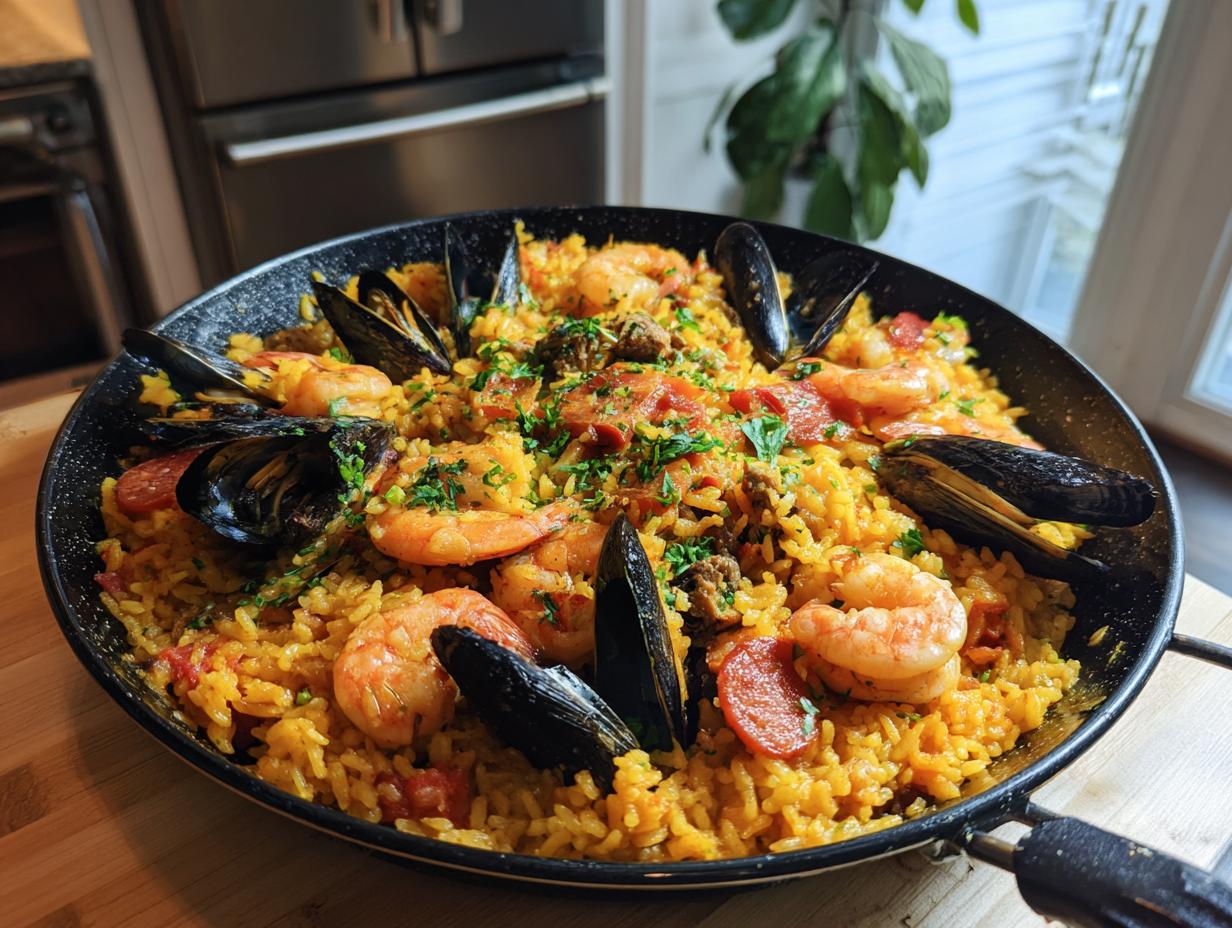
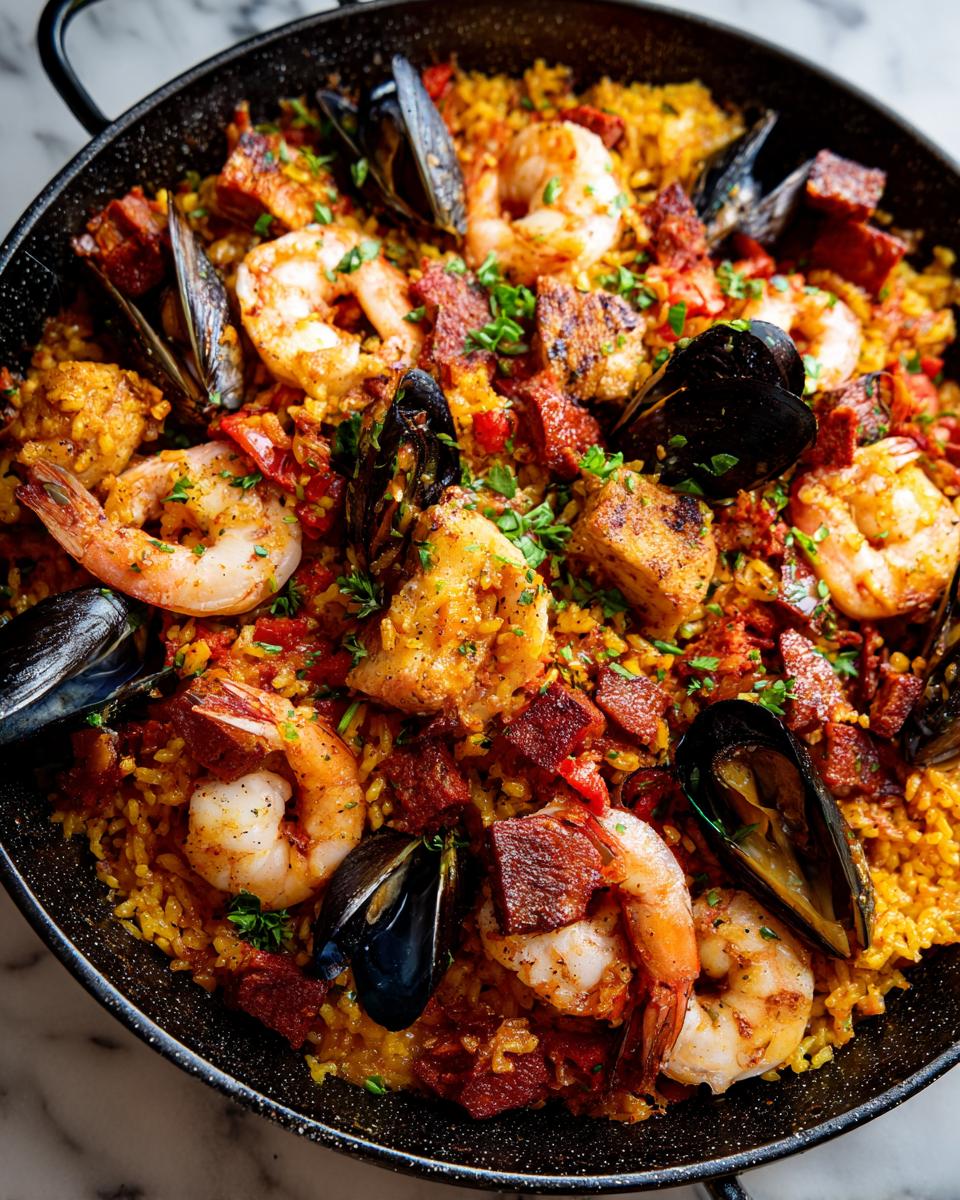
There’s just something about a paella, isn’t there? It just screams celebration, right? Visions of sunny Spanish coastlines, vibrant colors, and the most incredible aromas just fill my head. And the best part? You can totally bring that magic right into your own kitchen! I’ve spent ages testing and tweaking this authentic seafood paella recipe, and I’m so excited to share it with you. This isn’t just a meal; it’s a full-on, one-pan Spanish feast that’s surprisingly achievable, and trust me, it’ll make you feel like royalty at your own table. Get ready for a flavor explosion and that coveted crispy rice bottom!
- Why You'll Love This Authentic Paella Recipe
- Gather Your Ingredients for Paella
- Essential Equipment for Making Paella
- Step-by-Step Guide to Your Paella
- Tips for Perfect Paella Every Time
- Ingredient Notes and Substitutions for Paella
- Serving and Storing Your Paella
- Frequently Asked Questions About Paella
- Estimated Nutritional Information for Paella
Why You’ll Love This Authentic Paella Recipe
Seriously, who doesn’t love a colorful, steaming pan of paella? It’s perfect for impressing guests and feels incredibly special. Plus, it’s a true one-pan wonder, meaning way less cleanup for you. Every bite is an explosion of authentic Spanish flavor, thanks to saffron, paprika, fresh seafood, and savory chorizo. And the best part? You’ll learn how to achieve that coveted crispy rice bottom, the socarrat. Don’t let it intimidate you; with these easy steps, you’ll be making an amazing Spanish feast right in your own kitchen!
Gather Your Ingredients for Paella
Alright, let’s get our mise en place ready for this gorgeous paella! It looks like a lot, but it all comes together beautifully. Trust me, the flavor payoff is SO worth it.
- Olive Oil: You’ll need about 1/4 cup. Use a good quality one – it really makes a difference!
- Chicken: Grab 1 pound of boneless, skinless chicken thighs. Cut ’em into nice 1-inch pieces. Thighs stay so juicy!
- Salt and Pepper: For seasoning, of course! About 1 teaspoon of salt and 1/2 teaspoon of black pepper for that chicken.
- Shrimp: 1 pound of large shrimp, peeled and deveined. Fresh is best, but good quality frozen works too.
- Mussels: Gotta have mussels! Get 1 pound, scrubbed clean and debearded.
- Onion: 1 large onion, finely chopped.
- Red Bell Pepper: 1 red bell pepper, also chopped. Adds such a lovely sweetness and color!
- Garlic: 4 cloves, minced. Fresh garlic is non-negotiable here!
- Smoked Paprika: 1 teaspoon. This gives it that signature smoky Spanish flavor.
- Saffron Threads: This is key for that beautiful golden color and unique aroma! You’ll need about 1/2 teaspoon. Don’t skimp here; it’s what makes paella, well, paella!
- Diced Tomatoes: One 14.5-ounce can, undrained. They add liquid and a lovely tang.
- Chicken Broth: You’ll need 6 cups. Good quality broth makes a big impact.
- Arborio Rice: 2 cups. This is the magic grain that soaks up all that deliciousness and gets creamy yet firm.
- Chorizo: About 1/2 pound, sliced. Spanish chorizo, not the crumbly Mexican kind – it has a firmer texture and amazing smoky paprika flavor.
- Frozen Peas: 1/2 cup, for a pop of color and sweetness at the end.
- Fresh Parsley: 1/4 cup, chopped, for that gorgeous fresh finish.
- Lemon Wedges: For serving! Everyone loves a little squeeze of lemon.
Essential Equipment for Making Paella
Okay, so you can’t make paella without the right gear! The most important thing is your pan. You really want something nice and wide and shallow, like a traditional paella pan. This lets the rice cook in a thin layer, which is absolutely crucial for developing that amazing crispy bottom, the socarrat we’re all after! If you don’t have a paella pan, don’t fret! A large, shallow skillet (like a 12-inch or bigger) will totally work in a pinch. Just make sure it has good heat distribution.
Step-by-Step Guide to Your Paella
Alright, deep breaths! Making paella at home is totally doable, and honestly, it’s so much fun. Just follow along with these steps, and you’ll have an amazing Spanish feast on your table. It’s all about building those layers of flavor and giving that rice just enough time to get perfectly tender with that crackly bottom we love! Think of it like making your sheet pan salmon or salmon and veggies – it’s all about layering flavors in one pan!
Searing the Meats and Seafood for Paella
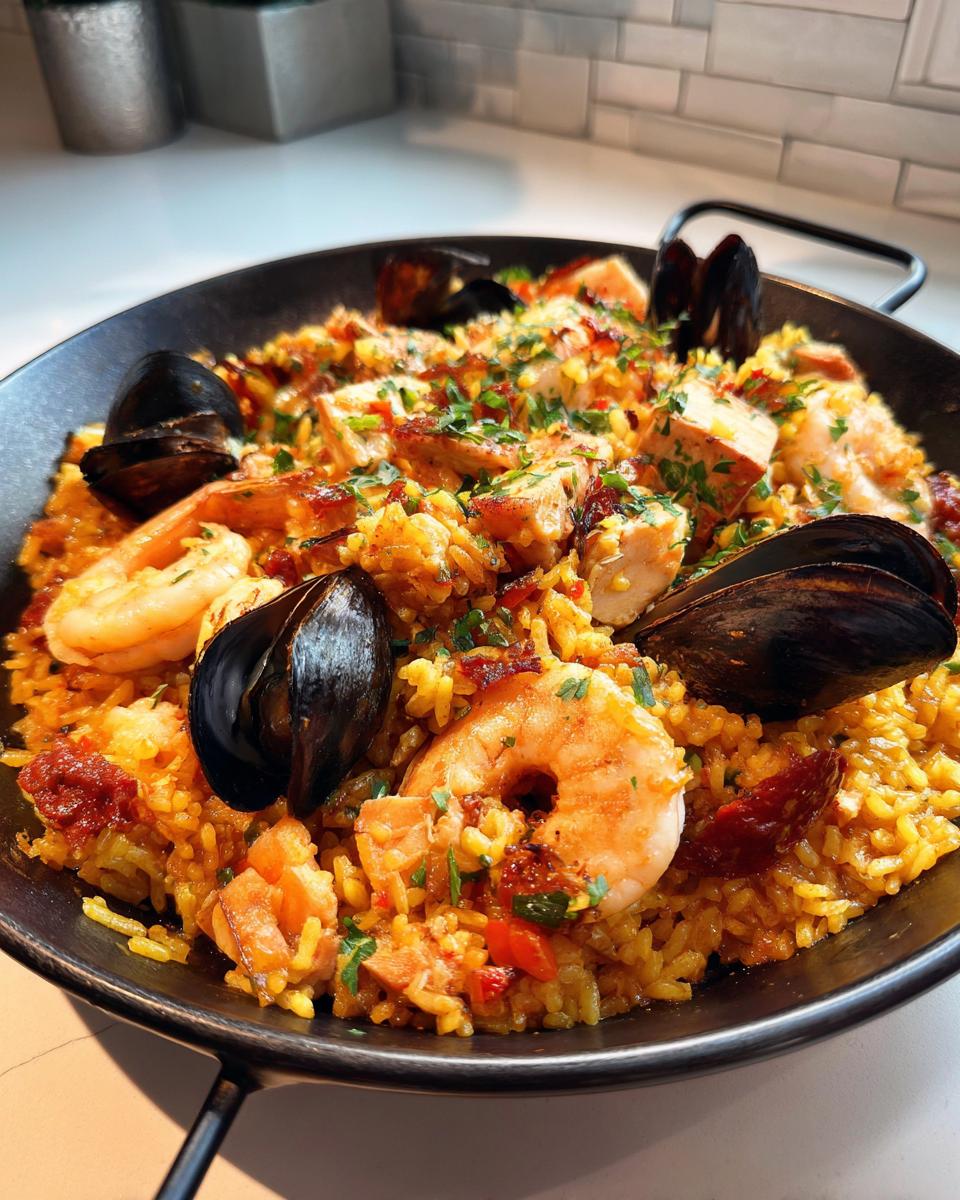
First things first, let’s get some serious flavor going. Heat up that olive oil in your paella pan or big skillet over medium-high heat. Season your chicken pieces with salt and pepper, then pop them in. Brown them all over until they’ve got a nice crust. Don’t cook them through, just brown! Take them out and set them aside. Now, same pan, add your shrimp. Cook ’em just a minute or two per side until they turn pink – we don’t want rubbery shrimp! Out they go next to the chicken. Finally, toss in those mussels, cover the pan, and let them steam for about 3-5 minutes until they pop open. Any that stay shut? Toss those. See? Already building that flavor foundation!
Building the Flavor Base of Your Paella
Wipe out the pan if there are any burnt bits, but keep that delicious oil. Toss in your chopped onion and bell pepper. Cook them down until they’re nice and soft, maybe 5-7 minutes. Then, add that minced garlic and the smoked paprika. Stir it all around for just a minute until it smells amazing – careful not to burn the garlic! Now, stir in your saffron threads and the undrained diced tomatoes. Let that cook for about 2 more minutes, just stirring gently. This is where the soul of your paella starts to really come alive!
Cooking the Rice to Perfection for Paella
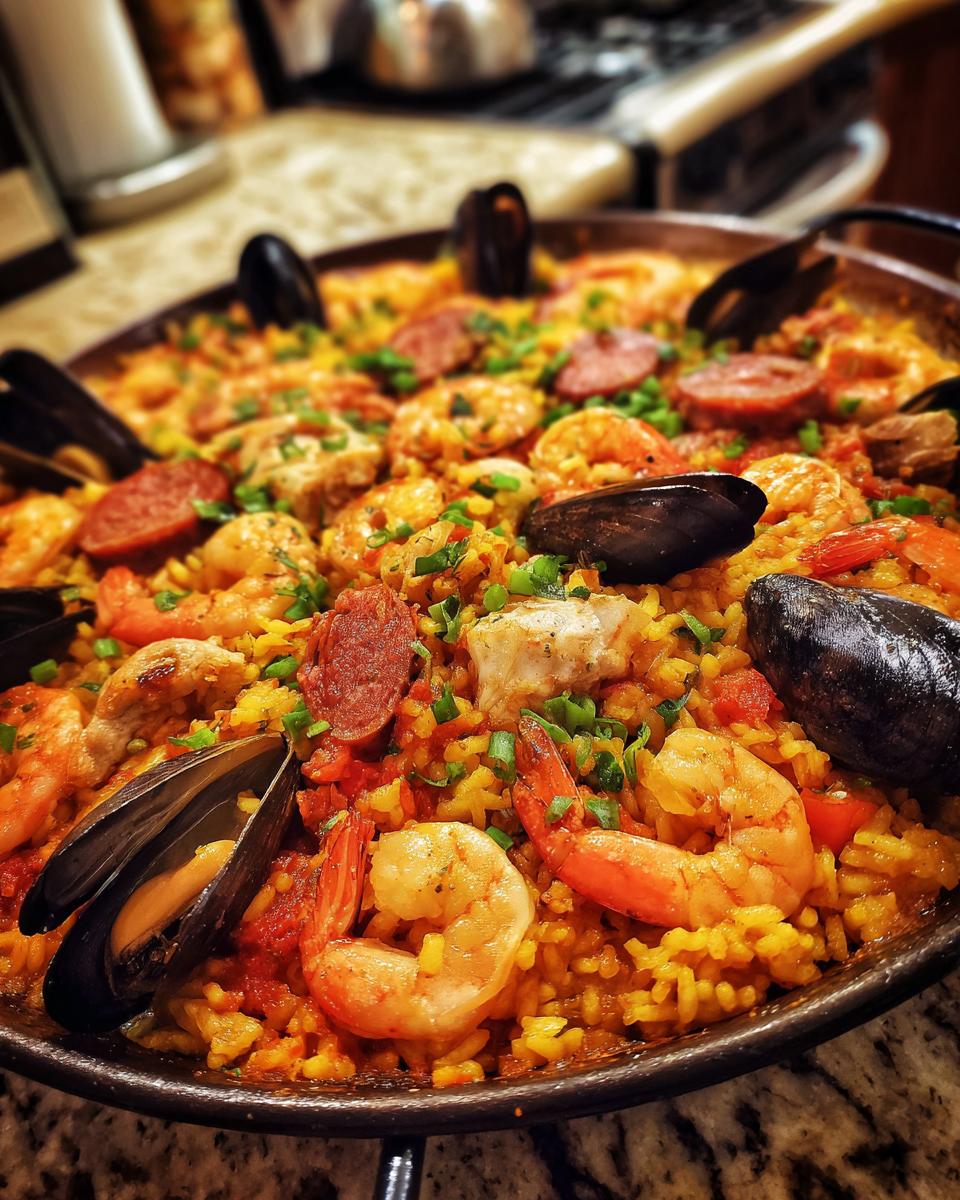
Time for the star! Pour in your chicken broth and bring it all to a gentle simmer. Now, stir in your Arborio rice. This is super important: once the rice is in, you really don’t want to stir it much anymore! Spread it out evenly. Return those browned chicken pieces to the pan, and then arrange your sliced chorizo all over the top. It gets so flavorful as it infuses into the rice. Lower the heat to medium-low, cover your pan (a lid or even foil works!), and let it simmer for about 15 minutes. You want most of the liquid absorbed, and the rice should be almost done. It’s kind of like making a one-pot chicken and rice – the gentle cooking is key!
Finishing Your Paella and Achieving Socarrat
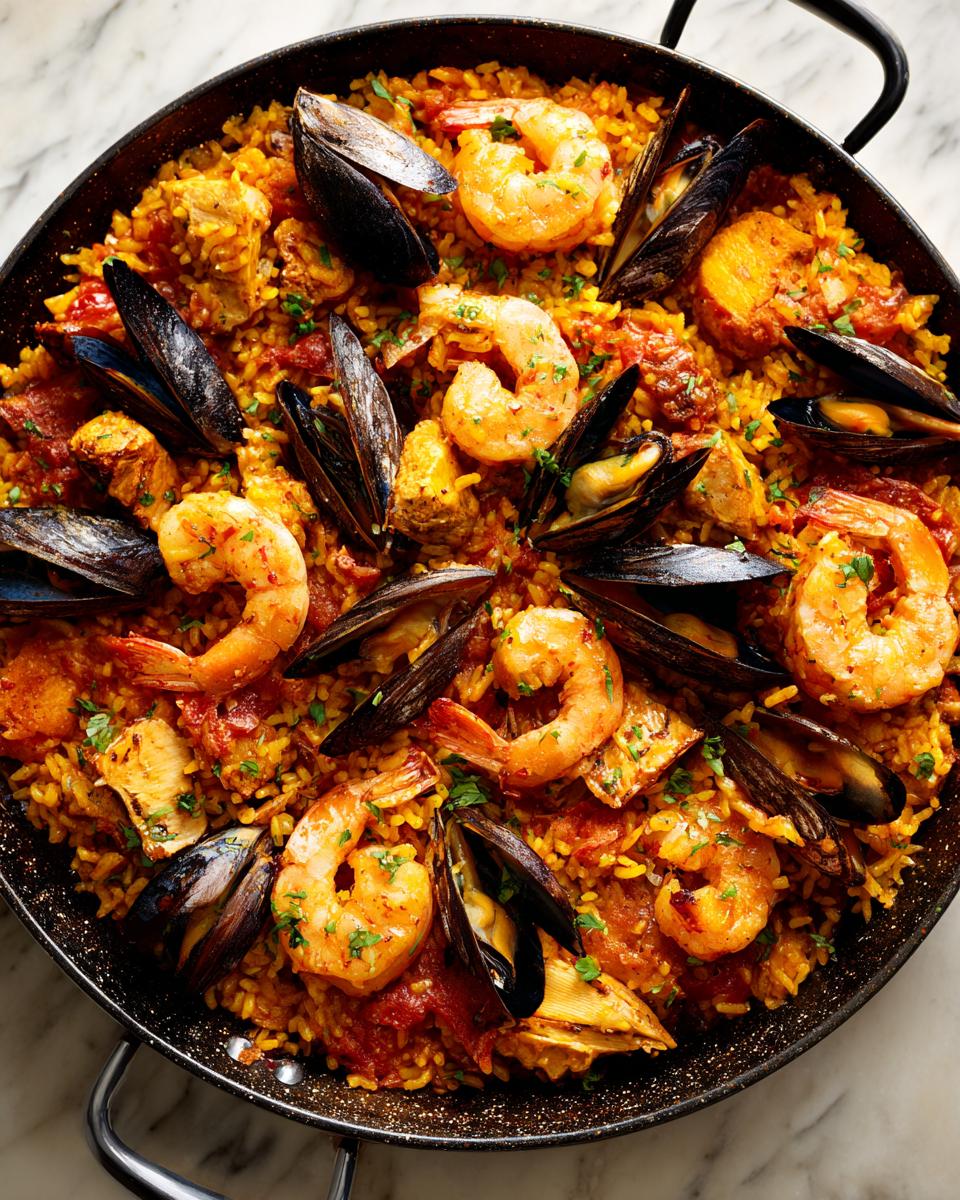
Okay, this is where the magic happens! Uncover your paella. Arrange those pretty cooked shrimp and mussels on top, tucking them in a bit. Sprinkle the frozen peas over everything for a burst of color. Now, leave it uncovered and let it cook for another 5-10 minutes. This is the crucial part for that delicious crispy bottom, the socarrat! You should start to hear a gentle crackling sound – that’s the rice toasting on the bottom. Listen for it! The liquid should be mostly absorbed, and the rice should be tender.
Tips for Perfect Paella Every Time
Okay, so I’ve made a lot of paella in my kitchen, and I’ve learned a few tricks that make all the difference! You want that perfect, flavorful rice with just a hint of that crispy bottom, right? Don’t worry, it’s totally achievable. My biggest tip for getting that coveted socarrat is to resist the urge to stir the rice after you add the broth. Seriously, walk away! Let that bottom layer get nice and toasted. Also, using Arborio rice is key here; it’s designed to release starch and create that creamy texture while still holding its shape. And please, please, please use a proper paella pan or the widest, shallowest skillet you have. It really does make a difference for even cooking and achieving the socarrat. I found that out the hard way once making my jalapeño cheddar cornbread, a too-deep pan just cooked it unevenly! Trust me, this paella recipe has been tested to give you fabulous results.
Ingredient Notes and Substitutions for Paella
Let’s talk ingredients for a sec! That Arborio rice is pretty important here because it gets tender but still has a nice bite, which is perfect for soaking up all the goodness. If you absolutely can’t find Arborio, a short-grain rice like sushi rice can work in a pinch, but it might get a *little* mushier, so watch it closely. And for that smoky flavor? Definitely use Spanish smoked paprika (pimentón!). It’s different from regular paprika. As for seafood, feel free to swap things around! Clams or even some calamari rings would be amazing additions. Just make sure they cook relatively quickly. And chicken broth is great, but a good seafood stock would take this paella stratospheric!
Serving and Storing Your Paella
Now for the grand finale! Serve your masterpiece straight from the pan – that’s part of the fun! Garnish generously with that fresh chopped parsley and have lemon wedges ready for squeezing. It’s pure Spanish sunshine on a plate! If you happen to have any leftovers (unlikely, I know!), let it cool completely before storing it in an airtight container in the fridge for up to 2 days. Reheat gently in a skillet over low heat with a splash of water or broth to revive that gorgeous rice. It won’t be quite as perfect as freshly made, but it’s still delicious – kind of like how my easy apple crisp tastes amazing the next day!
Frequently Asked Questions About Paella
Got paella questions? I’ve got answers! It’s totally normal to wonder about a few things when you’re diving into a dish like this, especially getting that perfect crispy rice and figuring out substitutions. Let’s clear up some common queries!
What’s the secret to getting the “socarrat” in my paella?
Ah, the socarrat! That’s the best part, right? The real secret is patience and the right pan. You *must* use a wide, shallow pan like a paella pan or a large skillet so the rice cooks in a thin layer. Then, critically, you need to resist the urge to stir the rice after you’ve added the liquid and let it simmer. Crucially, during the last 5-10 minutes of cooking, turn the heat up just slightly (listen for a gentle crackle!) and let that bottom layer crisp up. Don’t walk away – you want toasted, not burnt!
Can I really substitute ingredients in this seafood paella recipe?
Absolutely! While this specific seafood paella recipe is fantastic just as it is, flexibility is key in any home kitchen. If you can’t find mussels, clams are a great substitute, or even some scallops. If you’re not a fan of chicken or chorizo, you can skip them and load up on more seafood for a pure ocean delight. Just remember that cooking times might vary slightly with different ingredients!
Why do you recommend Arborio rice for this Spanish rice dish?
Great question! Arborio rice is a special type of short-grain rice that’s perfect for paella because it’s high in starch. As it cooks, it releases that starch, creating a creamy texture while still keeping its shape. This makes it super absorbent for all those wonderful broth flavors. While you can sometimes get away with other short-grain rices, Arborio really helps achieve that signature paella texture that isn’t too mushy, nor too firm.
My paella didn’t get crispy on the bottom. What went wrong?
Don’t tear your hair out! There are a few common culprits. Most likely, your pan wasn’t wide or shallow enough, meaning the rice cooked too thick. If the heat was too low the whole time, it might not have had a chance to crisp. Or, you might have stirred it too much during the simmering stage. Next time, try ensuring your pan allows for a thin layer of rice, and don’t be afraid to crank the heat just a *tiny* bit at the very end while listening for that tell-tale crackle to get that perfect socarrat on your Spanish rice dish.
Estimated Nutritional Information for Paella
Just so you know, the nutritional info for this paella is an estimate – what I’ve put below is what you’d typically see per serving. Keep in mind that using different brands or specific ingredients can change things up a bit, but this gives you a good general idea!
- Serving Size: 1 serving
- Calories: 650
- Fat: 30g
- Saturated Fat: 10g
- Unsaturated Fat: 20g
- Trans Fat: 0g
- Cholesterol: 150mg
- Sodium: 800mg
- Carbohydrates: 60g
- Fiber: 4g
- Sugar: 5g
- Protein: 35g
Authentic Seafood Paella Recipe
Learn to make a vibrant and flavorful seafood paella, a classic Spanish one-pan dish perfect for gatherings. This recipe guides you through achieving the coveted crispy rice bottom, known as socarrat, and balancing the delicious flavors of saffron, shellfish, chicken, and chorizo.
- Prep Time: 25 min
- Cook Time: 45 min
- Total Time: 70 min
- Yield: 6 servings 1x
- Category: Dinner
- Method: Stovetop
- Cuisine: Spanish
- Diet: Vegetarian
Ingredients
- 1/4 cup olive oil
- 1 pound boneless, skinless chicken thighs, cut into 1-inch pieces
- 1 teaspoon salt
- 1/2 teaspoon black pepper
- 1 pound large shrimp, peeled and deveined
- 1 pound mussels, scrubbed and debearded
- 1 large onion, chopped
- 1 red bell pepper, chopped
- 4 cloves garlic, minced
- 1 teaspoon smoked paprika
- 1/2 teaspoon saffron threads
- 1 (14.5 ounce) can diced tomatoes, undrained
- 6 cups chicken broth
- 2 cups Arborio rice
- 1/2 pound chorizo, sliced
- 1/2 cup frozen peas
- 1/4 cup chopped fresh parsley
- Lemon wedges, for serving
Instructions
- Heat olive oil in a large, shallow pan (paella pan or large skillet) over medium-high heat. Season chicken with salt and pepper, then cook until browned on all sides. Remove chicken from pan and set aside.
- Add shrimp to the pan and cook for 1-2 minutes per side, until pink. Remove shrimp and set aside.
- Add mussels to the pan, cover, and cook for 3-5 minutes, until they open. Discard any mussels that do not open. Remove mussels and set aside.
- Add onion and red bell pepper to the pan and cook until softened, about 5-7 minutes. Add garlic and smoked paprika and cook for 1 minute more until fragrant.
- Stir in saffron threads and diced tomatoes. Cook for 2 minutes, stirring.
- Pour in chicken broth and bring to a simmer. Stir in the Arborio rice.
- Return the browned chicken to the pan. Arrange the sliced chorizo over the rice.
- Reduce heat to medium-low, cover, and simmer for 15 minutes, or until most of the liquid is absorbed and the rice is nearly cooked. Do not stir during this time.
- Uncover and arrange the cooked shrimp and mussels on top of the rice. Sprinkle with frozen peas.
- Continue to cook uncovered for another 5-10 minutes, or until the rice is tender and the liquid is fully absorbed. You should hear a gentle crackling sound, indicating the formation of socarrat.
- Garnish with fresh parsley and serve immediately with lemon wedges.
Notes
- For the best socarrat, do not stir the rice after adding the liquid and allow it to crisp on the bottom for the last few minutes of cooking.
- You can substitute other seafood like clams or calamari.
- Ensure your pan is wide and shallow to allow for even cooking and socarrat development.
Nutrition
- Serving Size: 1 serving
- Calories: 650
- Sugar: 5g
- Sodium: 800mg
- Fat: 30g
- Saturated Fat: 10g
- Unsaturated Fat: 20g
- Trans Fat: 0g
- Carbohydrates: 60g
- Fiber: 4g
- Protein: 35g
- Cholesterol: 150mg