

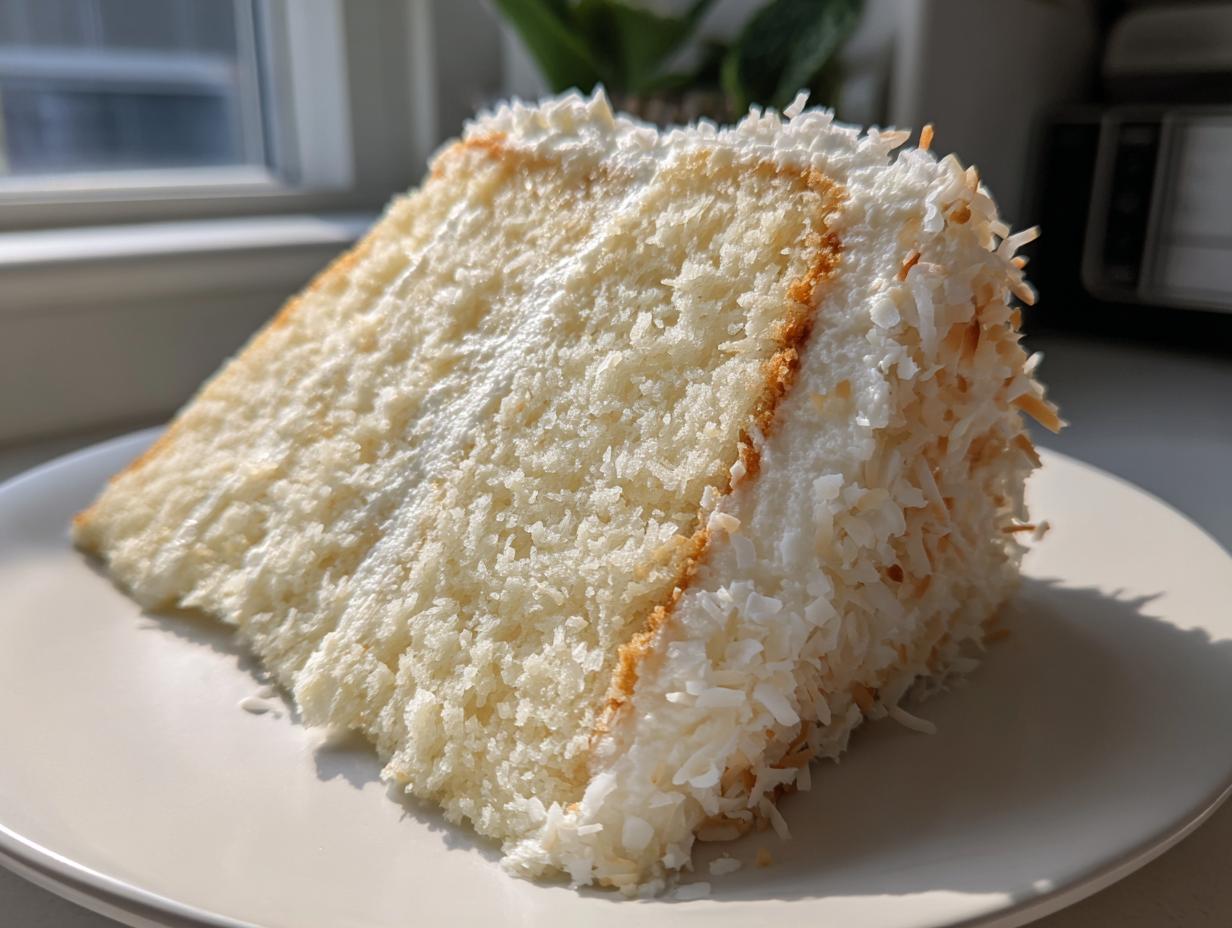
Have you ever looked at those gorgeous, snowy layer cakes in the bakery window and thought, “Wow, I could never manage that”? Well, I’m here to tell you that you absolutely can! My goal here at Kings Cook is making those show-stopping desserts completely achievable, and nothing proves that point better than this Southern Coconut Cream Layer Cake. This is truly the ultimate coconut cake recipe, and trust me, I’ve rigorously tested every single step to make sure your results are perfectly moist and fluffy every time. This Homemade Coconut Cake is pure comfort and celebration, and my clear instructions will guide you right to bakery-style perfection.
We’re keeping things totally from scratch here because that’s where the real quality comes from. If you want to feel that amazing sense of accomplishment, this is the recipe to reach for. You can check out more about my baking philosophy over on my about page if you’re new around here!
- Why This is the Best Coconut Cake Recipe for Your Celebration Cake Recipe
- Ingredients for Your Southern Coconut Cake From Scratch
- Step-by-Step Instructions for the Perfect Coconut Cake Recipe
- Tips for an Easy Coconut Cake From Scratch
- Coconut Cake Recipe Variations and Substitutions
- Serving Suggestions for This Tropical Coconut Dessert
- Storage and Make-Ahead Tips for Your Homemade Coconut Cake
- Frequently Asked Questions About the Coconut Cake Recipe
- Estimated Nutritional Data for This Celebration Cake Recipe
- Share Your Experience Baking This Coconut Cake Recipe
Why This is the Best Coconut Cake Recipe for Your Celebration Cake Recipe
If you need a showstopper, this is the one. Forget those dry, lackluster cakes you sometimes see—this isn’t it. This Southern Coconut Cake takes inspiration from the classics but guarantees a tender, melt-in-your-mouth result because we’re making it completely from scratch. I promise, once you master this coconut cake recipe, it’ll become your go-to for every single birthday and holiday gathering. It’s just that good!
Head over here sometime and grab some other favorites from my best dessert recipes list, but for now, let’s talk moisture.
Achieving a Moist Coconut Cake Texture
The biggest win for this recipe is how unbelievably Moist Coconut Cake it stays. The secret weapon? Room temperature ingredients—especially the butter, milk, and egg whites. When cold ingredients meet softened butter, they just don’t emulsify right, leading to a crumbly texture later. Plus, we use cream of coconut right in the batter! That little bit of sweet, thick coconut goodness goes a long way in keeping every bite tender and never dry.
The Secret to a Fluffy Layer Cake Recipe
We are aiming for a Fluffy Layer Cake Recipe here, not a dense brick! That fluff comes from how you handle the flour. You gently whisk the dry ingredients, then add the butter slowly to create those tiny air pockets, like sand. The most important part? When you add the liquid, mix ONLY until just combined. If you beat it too long once the flour is in, those gluten strands get tough, and say goodbye to fluffiness. A quick stir by hand at the end for the coconut shreds is all you need!
Ingredients for Your Southern Coconut Cake From Scratch
Gathering your ingredients is half the fun, right? When you’re making a cake this special, you can’t skimp on quality, but everything you need is easily found at your regular grocery store. Seriously, these ingredients work together perfectly to create that rich flavor profile people rave about. Remember what I always say: good components make for a happy cake!
I’ve broken everything down by component so you can shop or prep your station easily. And a quick note: please take the time to let your butter, eggs, and milk come up to temperature before you start mixing. It genuinely makes all the difference in how that batter comes together.
For the Tender Coconut Cake Layers
This list might look a little long, but that cream of coconut is an absolute rockstar, giving us tons of moisture.
- 1 3/4 cups all-purpose flour (We’ll sift this later, or just whisk well!)
- 1 3/4 cups granulated sugar
- 1 tablespoon baking powder (Make sure it’s fresh!)
- 1/2 teaspoon salt
- 1 cup unsalted butter, softened (This should be truly soft, not melty!)
- 4 large egg whites, room temperature (Separate these gently!)
- 1 cup whole milk, room temperature
- 1 teaspoon vanilla extract
- 1/2 cup cream of coconut (Yes, the thick, sweet kind, like Coco Lopez works great here)
- 1/2 cup unsweetened shredded coconut, finely chopped (We want these small so they disappear nicely into the crumb)
- 1/4 cup coconut extract (This boosts that tropical punch!)
- 1 cup unsweetened shredded coconut, toasted, for coating (These are for the outside finish)
For the Coconut Cream Cake Frosting
This frosting is rich, creamy, and just sweet enough to balance the tender layers. It’s what takes this from a good cake to a true Bakery Style Coconut Cake.
- 1 cup (2 sticks) unsalted butter, softened
- 4 cups powdered sugar, sifted (Sifting is non-negotiable here for a smooth texture!)
- 1/2 cup cream cheese, softened (Just a touch for tang!)
- 1/4 cup cream of coconut
- 1 teaspoon coconut extract
- 1/4 cup milk or heavy cream (We’ll use this to adjust the spread!)
Step-by-Step Instructions for the Perfect Coconut Cake Recipe
Okay, deep breath! Although this coconut cake recipe has a few moving parts, breaking it down makes it feel just like baking a simple loaf. I promise, if you follow these steps, you’ll feel like a seasoned baker by the time you pull this beauty out of the oven. Trust me, every minute you spend here results in a spectacular Bakery Style Coconut Cake!
Oh, and be sure to toast that exterior coconut ahead of time! Just spread it on a baking sheet and pop it into the 350°F oven for about 5 to 8 minutes—keep an eye on it because it goes from toasted to burnt *fast*. Think golden brown edges, not black rubble!
Mixing the Cake Batter for Maximum Flavor
First things first: preheat that oven to 350°F (175°C). Get three 8-inch cake pans greased, floured, and lined with parchment circles on the bottom. We’re aiming for zero sticking, remember? Now for the batter!
In your big bowl, whisk your dry stuff—flour, sugar, baking powder, salt. Now add the softened butter. I use my electric mixer on low here, beating it until it looks like coarse, damp sand. This step is crucial for trapping air. Once it’s sandy, move to the wet stuff in a different bowl: egg whites, milk, vanilla, and that thick cream of coconut. Whisk them together gently.
Get your mixer back on low speed. Add the wet mixture into the sandy butter mix in three separate additions. Don’t rush this! Mix until it’s *just* incorporated after each addition. The minute you add the last bit of liquid, stop the mixer!
Now, grab a rubber spatula. Stir in that coconut extract and the finely chopped coconut pieces by hand. Seriously, do this part gently! Overmixing the flour and coconut is how we end up with tough cake, and we want a super Tender Coconut Cake.
Baking and Cooling Your Coconut Layer Cake
Divide that beautiful batter evenly between your three pans. Into the oven they go! Bake them for about 25 to 30 minutes. You’ll know they are done because a toothpick inserted right into the center should come out clean or maybe just have a few moist crumbs clinging to it—that’s perfection for a Coconut Layer Cake.
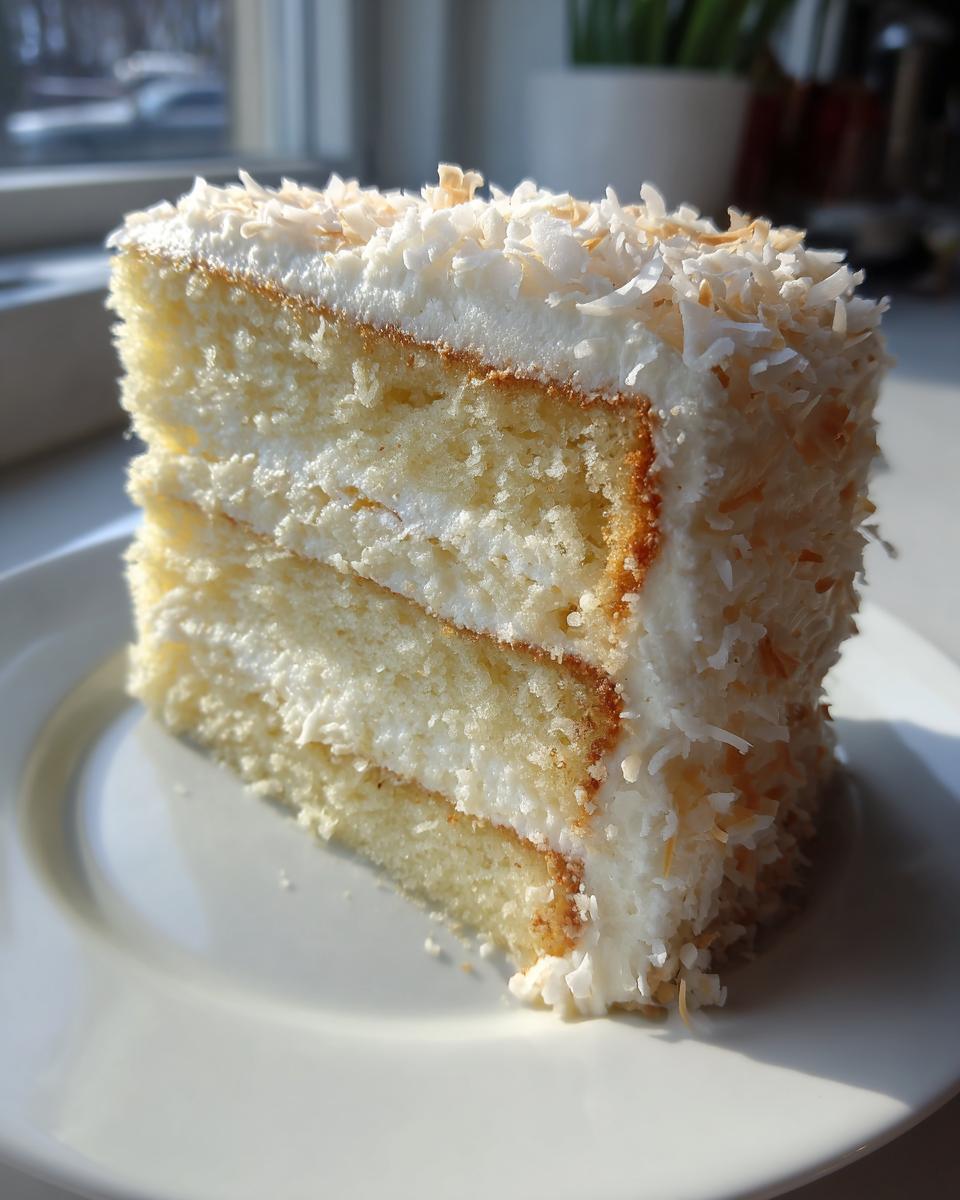
Once they look done, set them on a cooling rack, but give them 10 minutes *in the pan* first. If you try to dump them out immediately, they might collapse or tear. After 10 minutes, carefully flip them out onto the rack to cool completely. They must be 100% cool before we even think about frosting. Frosting a warm cake is just asking for an icy, soupy disaster!
If you loved these tips on keeping things light, you might enjoy my guide on making a great carrot cake; sometimes those lessons about gentle mixing carry over! Check out my carrot cake secrets here.
Preparing the Creamy Coconut Cream Cake Frosting
While those layers are cooling down, we tackle the frosting. Remember how we talked about room temp ingredients for the cake? Same rule applies here!
In a clean bowl, beat your soft butter and soft cream cheese together until it’s completely smooth and looks almost whipped. No lumps allowed if you want a super smooth finish for this Coconut Cream Cake!
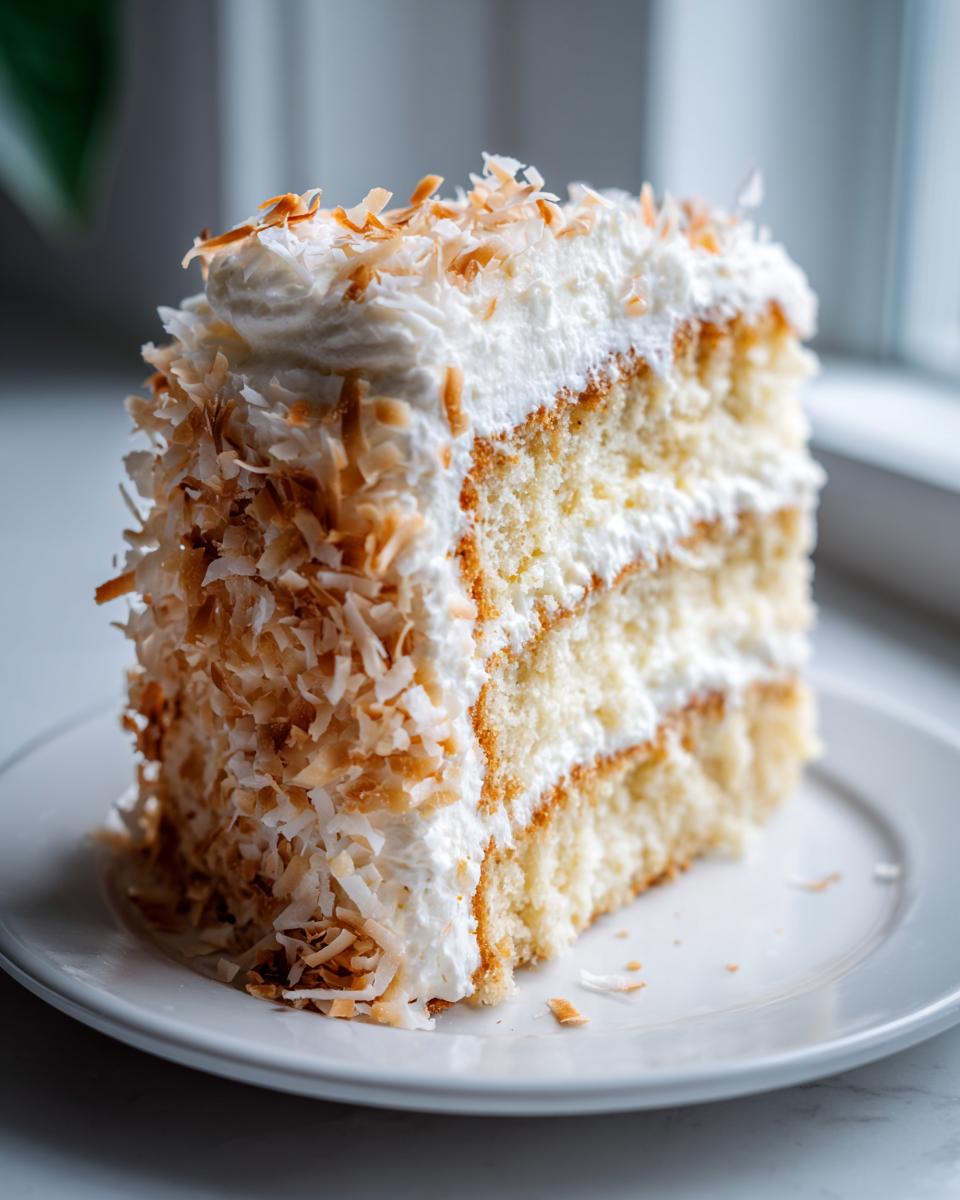
Next, start adding your sifted powdered sugar, a cup at a time. Mix slow! Once it’s all incorporated, stir in the cream of coconut and the coconut extract. This is where the magic flavor comes in. If the frosting seems a little stiff—which happens sometimes with all that powdered sugar—drizzle in the milk or heavy cream, just one tablespoon at a time, until it’s perfectly spreadable. You want it thick enough to hold its shape but smooth enough to glide across the cake without tearing.
Assembling and Decorating Your Show-Stopping Coconut Cake Recipe
Now for the fun part! Place your first cooled layer on your serving plate. Spread about one-third of that gorgeous frosting evenly over the top. Don’t press too hard; we want fluffy, not flat!
Place your second layer on top of the frosting, and spread another layer of frosting there. Top with the final layer. Frost the very top and all those sides until they are completely coated. Use an offset spatula to smooth it out until it looks as professional as possible.
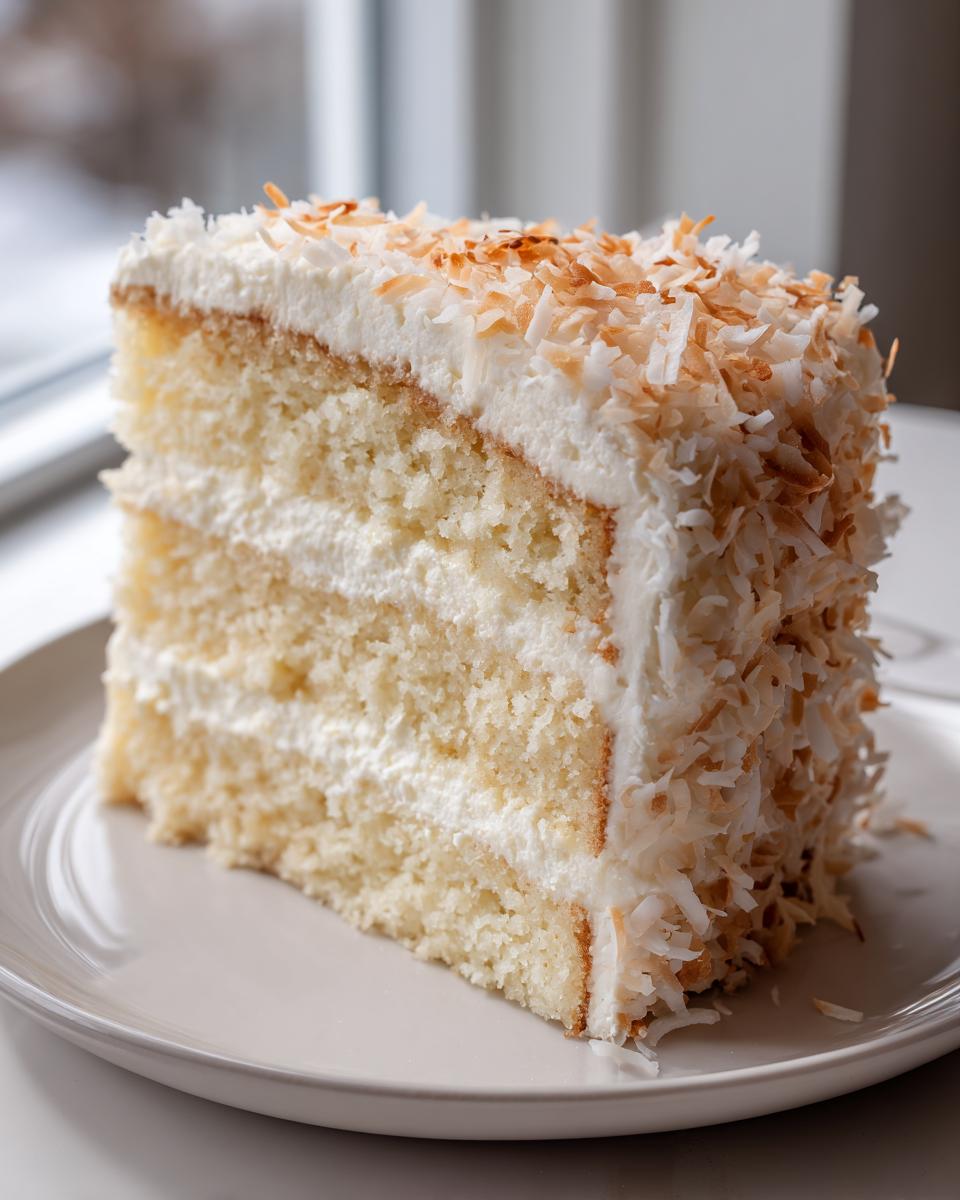
Finally, take those lovely toasted coconut flakes we made earlier and gently press them onto the top and sides of the cake. It’s messy, but oh so worth it for the texture contrast!
Here’s one last piece of advice I’ve learned stacking delicate cakes like this: cover the whole thing loosely with plastic wrap and pop it in the fridge for at least 30 minutes before slicing. It firms up the layers and the frosting, making those clean slices so much easier to achieve!
Tips for an Easy Coconut Cake From Scratch
Even though we’re making this incredible dessert completely from scratch, I want to make sure it feels like an Easy Coconut Cake From Scratch for you! Homemade doesn’t have to mean complicated, but a few expert tips really help nail that bakery texture. See, I’ve tested this recipe so many times that I know exactly where people might trip up, and I want to save you that trouble!
If you want to see how I keep my pound cakes moist, you should check out my pound cake guide, as some of the principles are the same when handling rich batters!
Ingredient Sourcing for Rich Coconut Flavor
Let’s talk liquids for a second because this is where many recipes go wrong. You absolutely need cream of coconut—that sugary, thick syrup—for the signature flavor and moisture in the cake and the frosting; don’t confuse that with thin coconut milk or coconut water! Coconut milk is great for adding extra moisture to your cake layers if you want them extra tender, but it doesn’t replace the cream of coconut.
Also, don’t be shy with the coconut extract. Since we use unsweetened coconut flakes on the outside, a pure, high-quality extract is key to making sure that amazing tropical flavor jumps out in every single bite.
Troubleshooting Common Coconut Cake Issues
If your finished cake ends up too dense, 99% of the time it’s because you overmixed the batter after combining the wet and dry ingredients. Stop the mixer when you still see a tiny bit of flour streak—the spatula will take care of the rest! That’s our secret to keeping that Tender Coconut Cake promise.
If your layers baked up dry, you likely left them in the oven a minute or two too long. Next time, pull them out right when the toothpick starts to come clean. Better to have a slightly underdone center that finishes setting on the rack than to have dry, crumbly edges!
Coconut Cake Recipe Variations and Substitutions
Don’t feel like you have to stick to my exact plan for this coconut cake recipe! Once you nail the basic structure—which you will, because I’ve tested it so much—it’s fun to start tossing in your own favorite flavors. Baking should always be fun, right? We want this cake to feel personal to you!
This recipe is built on moisture, so whatever you change, try to keep the liquids balanced. I know some folks just adore that slight tang that cream cheese brings to desserts, so I totally get why you might want to switch things up. If you’re looking for ways to customize this big layer cake, keep reading!
Speaking of customizing, if you want to see how I handle slight tweaks in another classic recipe, check out my guide on making carrot cake moist; those ingredient balancing tips often transfer perfectly to coconut desserts too! My carrot cake secrets are linked here.
Making a Coconut Cake with Cream Cheese Frosting
The frosting I gave you above is based on a classic buttercream using cream of coconut, which is buttery and sweet. But maybe you prefer that slight saltiness and tang! If you want a full-on Coconut Cake with Cream Cheese Frosting, it’s a super simple swap.
Basically, you’re going to ditch the extra butter in the frosting recipe. Keep the 1/2 cup of cream cheese, the powdered sugar, the cream of coconut, and the extract. You might need just a tablespoon or two of extra milk because cream cheese tends to be a little denser than pure butter, but that’s it! You’ll end up with a lighter, slightly tart frosting that perfectly cuts through the richness of those sweet coconut layers. It’s stunning for holiday baking, especially if you’re making an Easter Coconut Cake!
Another little twist folks love? Toss about half a cup of chopped white chocolate chips right into the cake batter along with the shredded coconut in step 6. It gives you little melt-in-your-mouth pockets of creamy chocolate that pair so well with the tropical notes!
Serving Suggestions for This Tropical Coconut Dessert
Alright, you’ve got this magnificent, snowy cake sitting on your counter. That’s fantastic! But how do you serve this ultimate Tropical Coconut Dessert to truly make it shine? You want accompaniments that complement that rich, sweet coconut flavor, not fight it, right?
Since this cake is so sweet and heavy on the dairy and coconut fats, a small side of fresh, slightly tart fruit makes the whole dessert feel lighter and more balanced. I’m talking about fruit that cleanses the palate!
- Pineapple slices: Naturally! It just doubles down on that tropical vibe. Make sure they are fresh and juicy.
- Raspberries or Strawberries: Their tartness is the perfect foil for the rich cream cheese frosting. Don’t use canned pie filling; use fresh berries piled lightly beside the slice.
- Kiwi: Cut into small wedges. The slight acidity is seriously refreshing.
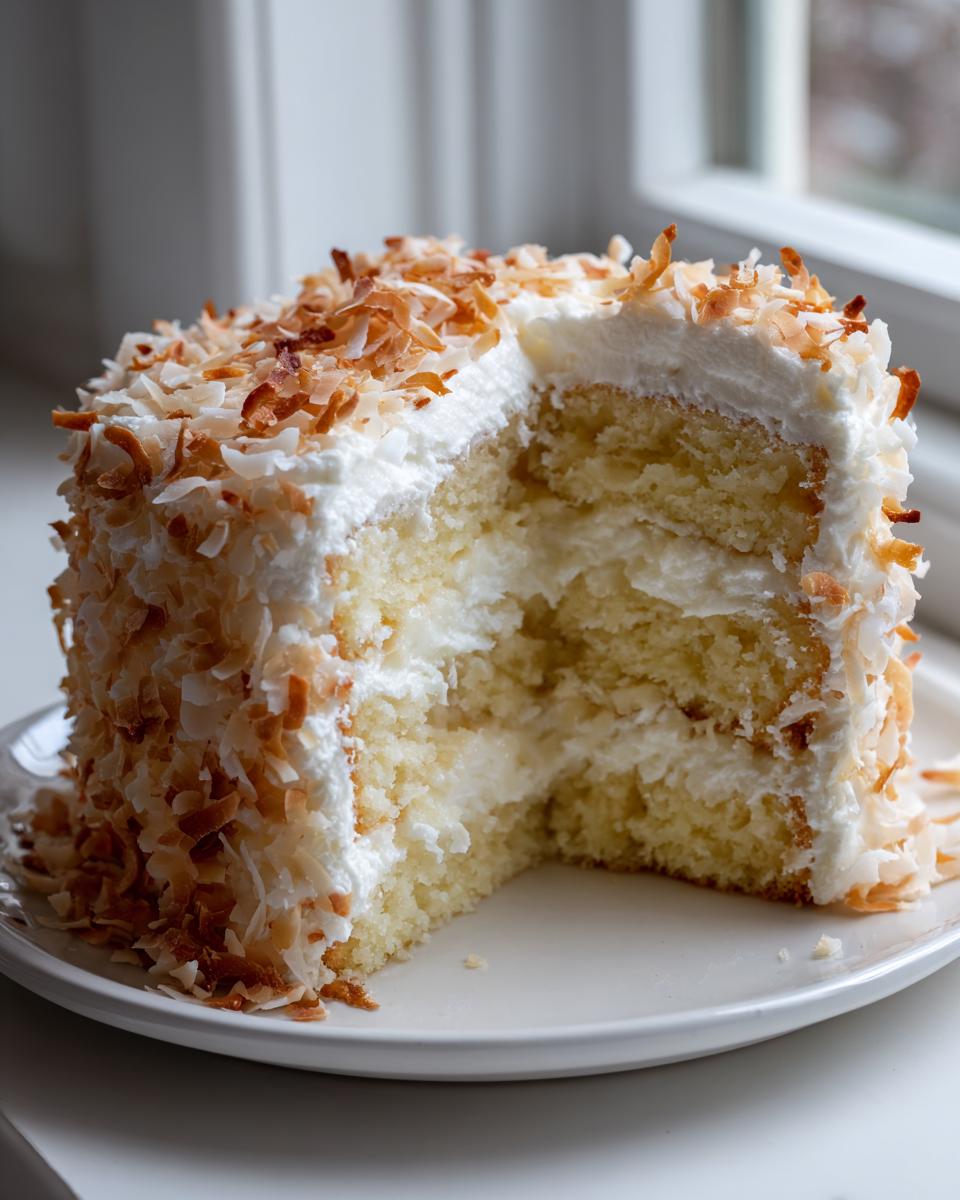
Honestly, just a tiny garnish of fresh berries on the plate makes this **Homemade Coconut Cake** look even more like it came straight from a high-end pastry chef!
Serving Temperature is Key
Remember how I told you to chill the cake for 30 minutes before slicing? That helps stabilize the frosting (which is important for presentation), but you don’t want to serve it ice cold!
For the absolute best flavor release—where you can taste the vanilla, the cream cheese, and all that coconut goodness—let the slice sit out on your serving plate for about 15 to 20 minutes before you dig in. It should be right around room temperature. That’s when this **Celebration Cake Recipe** truly sings.
Storage and Make-Ahead Tips for Your Homemade Coconut Cake
I know how it is! Sometimes you just can’t serve a huge Homemade Coconut Cake right away, especially when you’re planning a big party or holiday meal. Luckily, this cake holds up beautifully, but you do have to treat the layers and the frosted cake slightly differently to keep that dreamy texture we worked so hard for.
My golden rule? Moisture is your friend, but air is the enemy. We need to keep this cake happy until serving time!
Storing Unfrosted Cake Layers
If you want to get a serious jump start on this coconut cake recipe, you can absolutely bake the layers a day or two early. Once they are completely cool—and I mean stone cold—wrap each layer tightly in plastic wrap. I usually do two layers of plastic wrap around each one. This seals in every bit of that moisture we baked in.
You can keep these wrapped layers at cool room temperature for a full day, or you can stick them in the fridge for up to three days. If they’ve been chilling, just let them sit on the counter for about an hour before you try to frost them. Trying to frost a rock-hard, cold layer is asking for crumbs everywhere!
Storing the Fully Frosted Layer Cake
Once this beautiful beast is frosted and covered in coconut, it needs refrigeration because of the cream cheese and butter in that amazing frosting. Cover the whole cake loosely with a cake dome or tent it gently with plastic wrap—don’t let the plastic touch the delicate coconut coating!
It will keep beautifully in the fridge for about three to four days. It’s one of those rare cakes that actually tastes better on day two, honestly! The flavors meld together overnight.
Bringing the Cake to the Perfect Serving Temperature
This is the important final step for serving your Coconut Layer Cake. If you serve this straight from the fridge, the frosting will be hard and stiff, and the cake layers themselves will taste much firmer than they should. That ruins the whole buttery, tender experience!
So, plan ahead! About two hours before you plan to eat, take the cake out of the refrigerator. Leave it sitting on the counter, still loosely covered. This allows the butter and cream cheese in the frosting to soften back up, giving you that perfect, melt-in-your-mouth bite we aimed for with this Celebration Cake Recipe.
Reheating a Single Slice (If You Must!)
Maybe you just want one perfect slice later in the week when the rest of the cake is gone. If you notice the leftovers are getting a tiny bit dry (shocking, I know!), you can microwave a single slice for just 5 to 7 seconds. Seriously, 7 seconds is enough. That quick blast of warmth softens the fats in the cake and frosting just enough without making the whole thing greasy. It brings that fresh-from-the-oven feeling right back to your **Homemade Coconut Cake**!
Frequently Asked Questions About the Coconut Cake Recipe
I know you’ve got questions! When you’re making a show-stopper like this, it’s smart to check every detail before you start whisking. I’ve lumped the most common things people ask me about this recipe right here—things I learned after testing this version dozens of times. You won’t have any surprises after reading these!
Can I use sweetened shredded coconut in the batter for this coconut cake recipe?
This is a great question because sweetened flakes are everywhere! For the actual cake layers, I really, *really* recommend sticking to the unsweetened coconut that you’re going to chop finely. Why? Because our Coconut Cream Frosting is already quite sweet thanks to the cream of coconut and the powdered sugar.
If you use sweetened coconut in the batter too, the whole thing can end up tasting just too sugary, and you lose that lovely balance we’re aiming for in this coconut cake recipe. The sweetened flakes are perfect for pressing onto the outside, though—that’s where you get that nice chewiness!
How do I make this a tender coconut cake if I use a cake mix?
Look, I get it; sometimes you need speed! But honestly, if you’re looking for the absolute best texture, making this completely from scratch, as written, is your key to a truly Tender Coconut Cake. Doctoring a cake mix is fine for a quick dessert, but those mixes often rely on stabilizers that result in a slightly mushy or artificial texture when you add too many heavy things like coconut milk and extracts.
With this from-scratch method, we control the exact ratios of fat and liquid, which is what creates that light, fluffy structure you see in bakery cakes. If you have the time, skip the mix! It’s way more satisfying to know you built that tenderness from the ground up.
Is this Southern Coconut Cake suitable for an Easter Coconut Cake?
Absolutely, one hundred percent yes! This Southern Coconut Cake is basically the definition of a holiday centerpiece. It comes out looking beautifully white and snowy, which is perfect for spring holidays like Easter, or even for serving at a Mother’s Day brunch.
Because it layers up so tall and is covered completely in coconut flakes, it photographs beautifully and looks impressive on any dessert platter. You don’t need any fancy piping skills; the coconut itself does most of the decorating work, making it a fantastic choice for any large Celebration Cake Recipe you have lined up throughout the year!
Estimated Nutritional Data for This Celebration Cake Recipe
Now, I know what some of you are thinking: that frosting looks rich! And you’d be right! This is a decadent, show-stopping dessert meant for celebrations, so we need to be realistic about what’s in that amazing slice. While I haven’t sent this cake off to a major lab—I prefer to trust my taste testers, frankly—I have put together an estimate based on the standard ingredients used in the recipe.
This data is just a helpful guideline, okay? It definitely assumes you’re eating a standard slice size. If you’re serving this for your next big party, just know you’re serving up pure indulgence!
- Serving Size: 1 slice
- Calories: 480
- Sugar: 55g
- Sodium: 250mg
- Fat: 28g
- Saturated Fat: 17g
- Unsaturated Fat: 11g
- Trans Fat: 0.5g
- Carbohydrates: 58g
- Fiber: 1g
- Protein: 5g
- Cholesterol: 85mg
I’m sharing this because transparency is important in the kitchen, and I want you to feel confident every step of the way. Just keep in mind these figures are estimates based on the exact amounts listed in the ingredients section. If you add extra toasted coconut or make a bigger stack per slice, those numbers will shift a bit!
Share Your Experience Baking This Coconut Cake Recipe
We did it! You’ve successfully navigated your way through the best coconut cake recipe I know—the rich, moist, bakery-worthy Southern Coconut Cream Layer Cake. Now that you have this gorgeous dessert cooling on the rack (or maybe you’ve already cut into it—no judgment here!), I need to know all about it!
Baking is so much more fun when we share the results. When I started Kings Cook, it was all about turning those home cooks who felt intimidated into absolute baking rock stars, and seeing your successes is the absolute best part of my day. You can read more about why sharing our kitchen wins is so important on my about page.
Let Me Know How It Went!
Did the layers turn out fluffy? Did the frosting spread like a dream? Did your family clear the plate in five minutes flat?
- Rate It! If you loved how easy and delicious this cake turned out, please leave a star rating right down below the recipe card! It helps other bakers trust that this recipe truly delivers on its promises.
- Tell Me Everything in the Comments: Did you make any small swaps? Did you serve it for an Easter Coconut Cake celebration? I adore reading your stories and answering any last-minute questions you might have about that Coconut Layer Cake process.
- Share Your Beauty Shots: If you snapped a picture of your finished, coconut-covered masterpiece, tag me on social media! Seeing your beautifully decorated Celebration Cake Recipe is the highlight of my week.
Seriously, don’t be shy! I stand behind every recipe I share, and I want to celebrate your wins with you. Go on, tell me all about your journey to making this incredible Homemade Coconut Cake!
PrintSouthern Coconut Cream Layer Cake From Scratch
Bake a moist, fluffy, and tender Southern coconut layer cake from scratch. This recipe features rich coconut flavor in the layers and a creamy coconut frosting, resulting in a bakery-style dessert perfect for celebrations.
- Prep Time: 30 min
- Cook Time: 30 min
- Total Time: 1 hour 30 min
- Yield: 12 servings 1x
- Category: Dessert
- Method: Baking
- Cuisine: American
- Diet: Vegetarian
Ingredients
- 1 3/4 cups all-purpose flour
- 1 3/4 cups granulated sugar
- 1 tablespoon baking powder
- 1/2 teaspoon salt
- 1 cup unsalted butter, softened
- 4 large egg whites, room temperature
- 1 cup whole milk, room temperature
- 1 teaspoon vanilla extract
- 1/2 cup cream of coconut (like Coco Lopez)
- 1/2 cup unsweetened shredded coconut, finely chopped
- 1/4 cup coconut extract
- 1 cup unsweetened shredded coconut, toasted, for coating
- For Coconut Cream Frosting:
- 1 cup (2 sticks) unsalted butter, softened
- 4 cups powdered sugar, sifted
- 1/2 cup cream cheese, softened
- 1/4 cup cream of coconut
- 1 teaspoon coconut extract
- 1/4 cup milk or heavy cream (as needed)
Instructions
- Preheat your oven to 350°F (175°C). Grease and flour three 8-inch round cake pans. Line the bottoms with parchment paper circles.
- In a large bowl, whisk together the flour, sugar, baking powder, and salt.
- Add the softened butter to the dry ingredients. Beat with an electric mixer on low speed until the mixture resembles coarse sand.
- In a separate bowl, whisk together the egg whites, milk, vanilla extract, and cream of coconut until just combined.
- With the mixer on low, gradually add the wet ingredients to the dry ingredients in three additions, mixing until just incorporated after each addition. Do not overmix.
- Stir in the finely chopped unsweetened coconut and coconut extract by hand.
- Divide the batter evenly among the prepared cake pans.
- Bake for 25 to 30 minutes, or until a toothpick inserted into the center comes out clean.
- Let the cakes cool in the pans for 10 minutes before inverting them onto a wire rack to cool completely.
- While the cakes cool, prepare the frosting: Beat the softened butter and cream cheese together until smooth and creamy.
- Gradually add the sifted powdered sugar, beating until combined.
- Mix in the cream of coconut and coconut extract. Add milk or cream one tablespoon at a time until you reach a smooth, spreadable consistency.
- Once the cakes are completely cool, place one layer on a serving plate. Spread about one-third of the frosting evenly over the top. Repeat with the second layer.
- Place the final layer on top. Frost the top and sides of the entire cake with the remaining frosting.
- Press the toasted shredded coconut onto the top and sides of the cake.
- Chill the cake for at least 30 minutes before slicing for the best texture.
Notes
- To toast the shredded coconut, spread it in a single layer on a baking sheet and bake at 350°F (175°C) for 5-8 minutes, watching closely to prevent burning.
- For extra coconut flavor in the layers, you can substitute some of the milk with coconut milk.
- This cake tastes best when served at room temperature after chilling.
Nutrition
- Serving Size: 1 slice
- Calories: 480
- Sugar: 55g
- Sodium: 250mg
- Fat: 28g
- Saturated Fat: 17g
- Unsaturated Fat: 11g
- Trans Fat: 0.5g
- Carbohydrates: 58g
- Fiber: 1g
- Protein: 5g
- Cholesterol: 85mg