

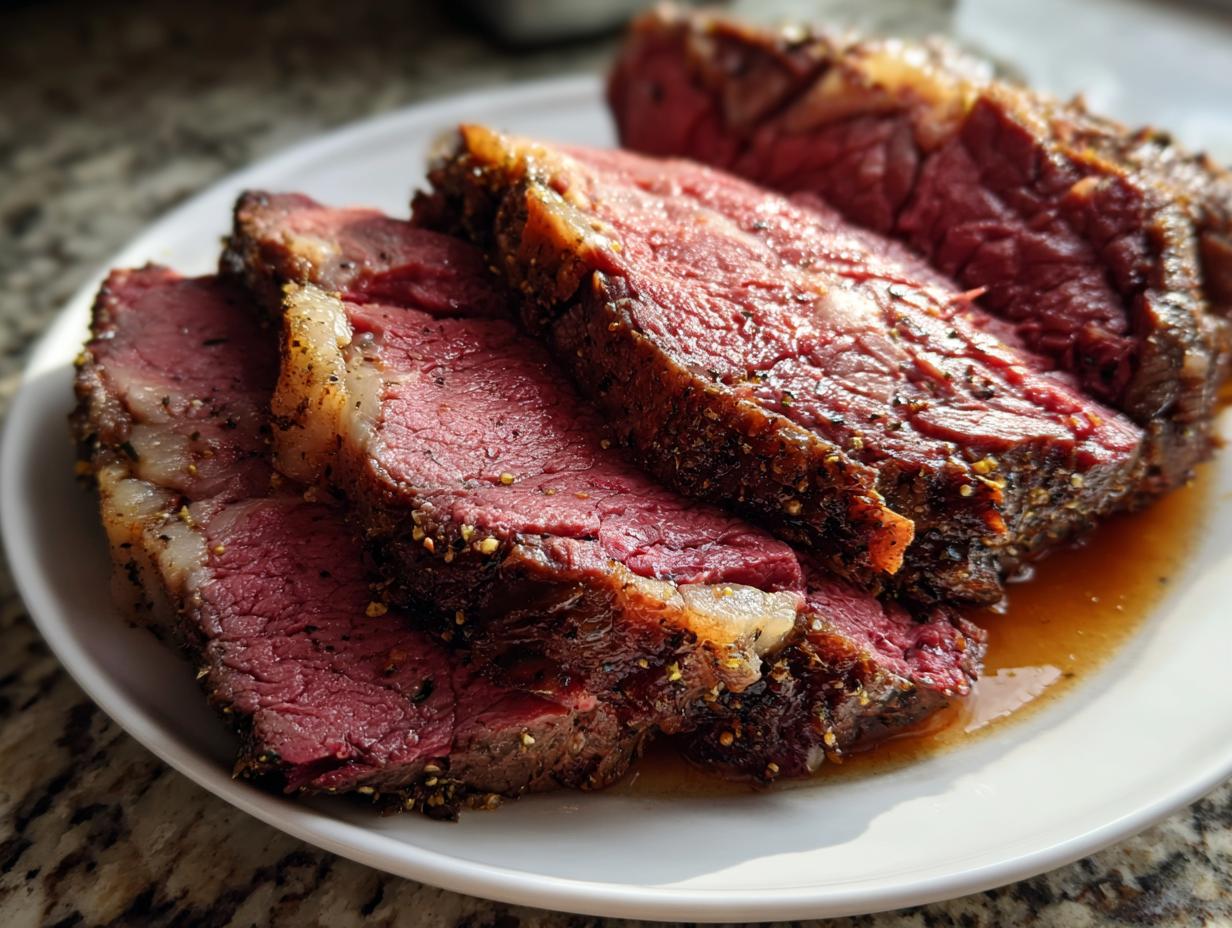
I know what you’re thinking. Prime rib? That gorgeous, intimidating slab of beef that only shows up on Christmas or maybe a very, very special anniversary? Thinking about roasting a standing rib roast can give anyone the chills. But trust me on this—you absolutely can achieve a holiday centerpiece that is unbelievably juicy inside and perfectly crusted outside. I’ve tested this specific oven-roasted prime rib method dozens of times, tweaking temperatures until I found the sweet spot. Forget the stress; this is your new *foolproof guide to prime rib*. It’s time to bring that incredible flavor and magic right into your own kitchen. You’ve got this!
- Why This is Your *Perfect Prime Rib Every Time* Guide
- Gathering Ingredients for Your *Garlic Herb Prime Rib*
- Essential Equipment for *Roasting Beef Prime Rib Step by Step*
- The *Standing Rib Roast Cooking Guide*: Preparation Steps
- *How to Cook Prime Rib Roast*: The Two-Temperature Method
- Making the *Prime Rib Au Jus Recipe* from Pan Drippings
- Expert Tips for an *Easy Oven Roasted Prime Rib*
- Frequently Asked Questions About Cooking *Prime Rib*
- Sharing Your *Holiday Beef Roast Recipe* Success
Why This is Your *Perfect Prime Rib Every Time* Guide
If you’re worried about messing up this big cut of meat, I totally get it! That’s why we use the two-temperature method—it’s the key to that *perfect prime rib every time*. We hit it with a blast of high heat at the start to get that amazing crust developing, and then we back way off. The lower heat keeps things gentle, making sure you get truly *tender prime rib roast* without accidentally boiling it! If you want to learn more about my commitment to dependable cooking methods, head over to my About Page.
- We prioritize a reliable meat thermometer over sticking strictly to time.
- This method guarantees a fantastic, vibrant crust and edge-to-edge pink center.
- Using this technique makes a *juicy prime rib recipe* achievable even for first-timers.
Bone-In vs. Boneless *Prime Rib Recipe* Considerations
For the absolute best flavor and protection, I always recommend bone-in. Those bones actually act like little insulation shields, helping the meat cook a bit more evenly. Boneless is certainly easier to carve after resting, which is a big time-saver when you’re rushing to get dinner on the table. Pick what feels most comfortable for *roasting beef prime rib step by step*!
Gathering Ingredients for Your *Garlic Herb Prime Rib*
Okay, let’s talk about what goes into this showstopper. When you’re dealing with a beautiful hunk of meat like a prime rib, quality matters! You need that well-marbled, bone-in roast—that fat equals flavor, folks. Don’t try to skimp here; this is the star of the show. We keep the non-meat ingredients simple so the beef flavor absolutely shines through. Here is exactly what you need to pull this easy oven roasted prime rib off perfectly.
- One (5-7 pound) bone-in prime rib roast, nice and well-marbled
- 3 tablespoons coarse kosher salt (I like the flakes for texture!)
- 2 tablespoons freshly ground black pepper
- 1 tablespoon dried thyme
- 1 tablespoon dried rosemary
- 6 cloves garlic, minced finely
- 2 tablespoons olive oil
- 1 cup beef broth (this is for the light au jus later)
The *Best Prime Rib Seasoning* Blend
This rub is powerful but simple. Before you even touch this mixture, grab some paper towels and truly pat that roast dry. I mean, get it bone dry! Moisture is the enemy of a good crust, and we want that beautiful exterior. Once it’s dry, we’ll make the garlic paste first—minced garlic mixed with the olive oil. Rub that all over them, and then, only then, do you slather on the heavy mix of salt, pepper, thyme, and rosemary. Don’t be shy with the seasoning; this big cut needs it!
Essential Equipment for *Roasting Beef Prime Rib Step by Step*
Before you even think about pulling that gorgeous beef out of the fridge, let’s talk gear. Having the right tools ready makes this whole process so much smoother. You absolutely need a sturdy roasting pan, and it must have a rack to fit inside it. The rack is essential because it lifts the *prime rib* up off the metal bottom of the pan. If it rests directly in the pan, the bottom of your roast is going to steam instead of roast, and we want that glorious crust all the way around!
But here is the number one, non-negotiable item for this entire operation: a really good digital meat thermometer. I’m being serious here; if you try to guess on this, you’re going to end up with grey, overdone beef, and nobody wants that. We need precision to nail that *medium rare prime rib temperature*. Stick that thermometer into the deepest, thickest part of the meat, making absolutely sure you are not touching any bone underneath. Trust me, this tool takes all the guesswork out of your *holiday beef roast recipe* and gives you the confidence you need for a stunning result.
The *Standing Rib Roast Cooking Guide*: Preparation Steps
Alright, this is where the magic starts long before the oven even thinks about turning on! The single most important thing you can do for an even cook on your roast is temper it first. That means getting it out of the cold box and letting it sit on the counter for a solid three to four hours before you plan to cook it. I learned this the hard way once; I was running late for Christmas dinner, slapped a cold roast into a hot oven, and ended up with a weird band of grey meat cooked right around the edges and barely pink in the absolute center. Never again! Letting it relax lets the internal temperature rise slowly and evenly. Then, you make that wonderful garlic-oil consistency—it’s just the minced garlic and olive oil whisked up smooth. If you want to read more about my kitchen lessons, check out my About Page!
Applying the Rub for a *Tender Prime Rib Roast*
So, once that beef has warmed up a bit—remember, we patted it dry earlier?—it’s time to cover it! You want that garlic-oil paste rubbed everywhere first. It’s sticky, and it acts like the glue for our incredible herb and salt mix. Smear it top, bottom, and sides. Then, take your gorgeous dried rub and press it firmly onto the surface. If you happen to have a boneless roast, this is also the time to grab some butcher’s twine and tie it up every couple of inches. Tying keeps that roast nice and snug, so it shrinks into a perfect, symmetrical log while roasting. It really helps everything cook uniformly!
*How to Cook Prime Rib Roast*: The Two-Temperature Method
This is the part where we stop guessing and start cooking like pros! We are using the two-temperature method to lock in all that juiciness. First, crank your oven up high to 450 degrees Fahrenheit. Place your heavily seasoned roast—fat-side up—on that rack in the pan and let it blast for exactly 15 minutes. Those initial 15 minutes are crucial because they start setting that amazing, flavorful crust we worked so hard to create.
After those 15 minutes, take a deep breath, reduce that heat down to 325 degrees Fahrenheit, and let the slow roasting begin. Now, forget the clock! You need that digital thermometer handy. You are aiming for an internal reading of 125 degrees Fahrenheit when you pull it out. Insert that probe directly into the thickest spot, making absolutely sure you clear the bone. When you hit that 125°F mark, pull that beauty out immediately. I love checking out detailed guides, and this method looks wonderful: Check out this technique!
Achieving *Medium Rare Prime Rib Temperature* Through Resting
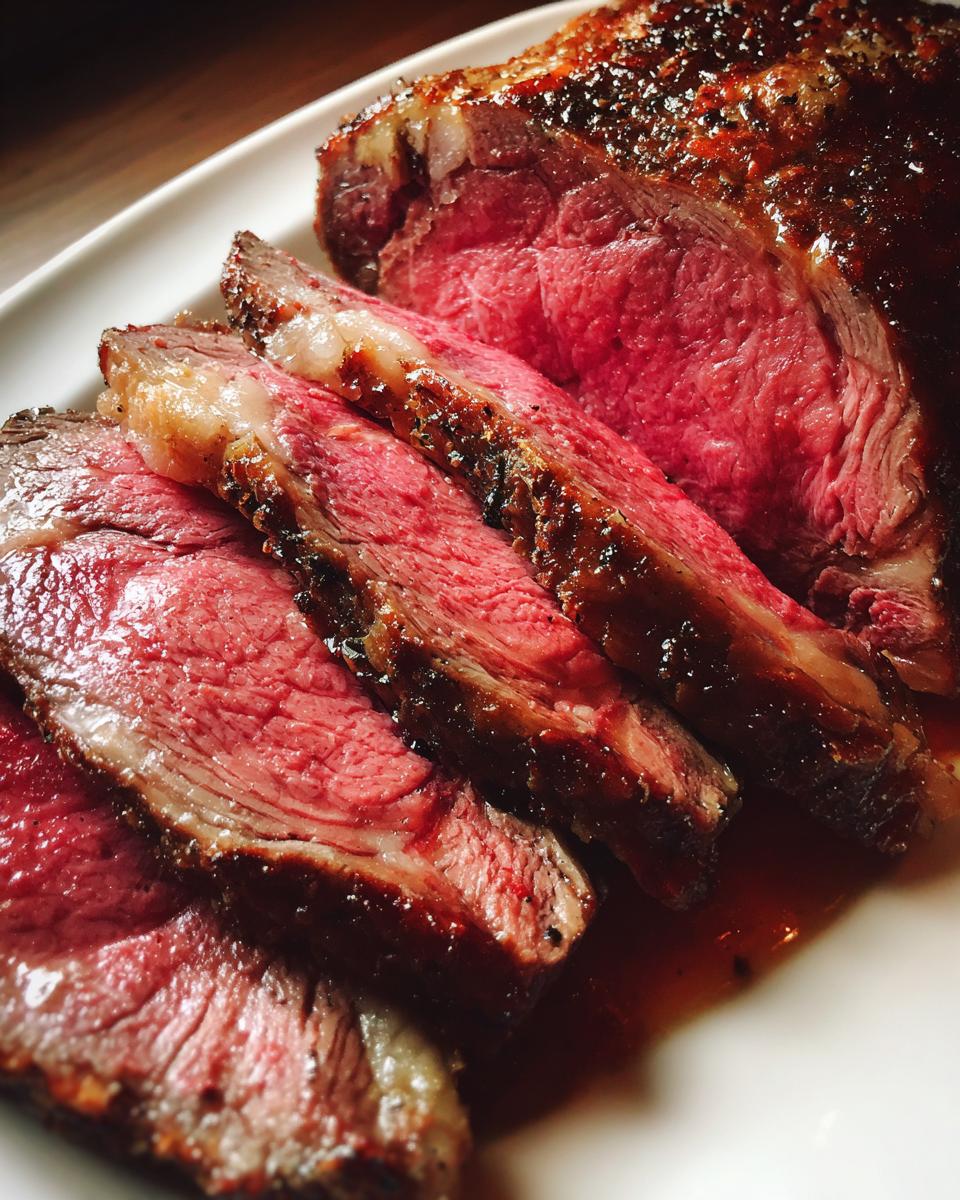
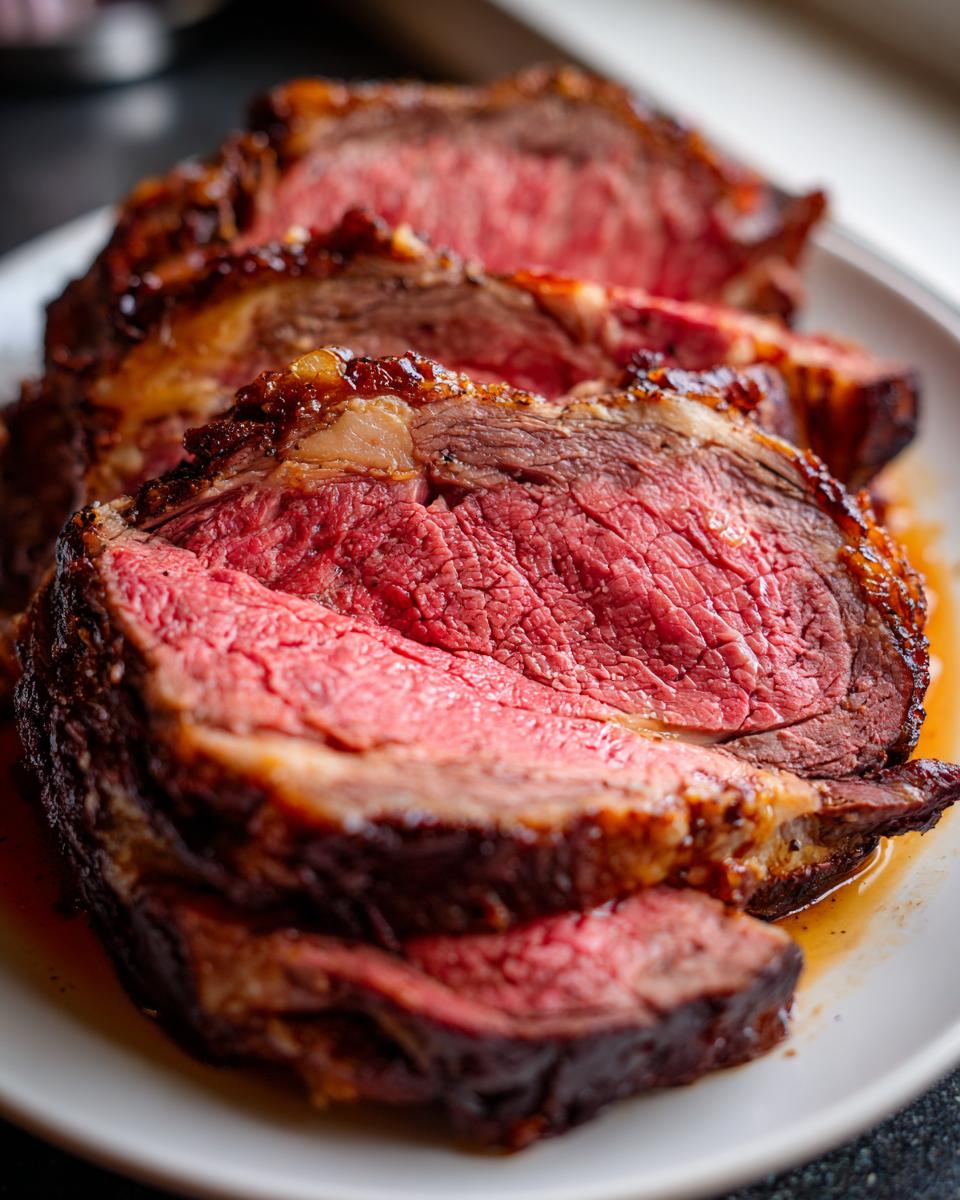
Listen to me: resting is non-negotiable! If you cut into that roast right away, all those lovely juices you worked hard to keep inside will run out onto your cutting board instead of back into the meat. Tent it loosely—don’t wrap it tight, or you’ll steam that crust we made!—with aluminum foil and let it just sit there for a solid 20 minutes minimum. While it rests, the temperature isn’t staying still; it keeps cooking internally, which is called carryover cooking. That 125°F you took it out at will rise perfectly to that glorious 130°F to 135°F sweet spot for a true *medium rare prime rib temperature*. Seriously, don’t cheat the resting time!
Making the *Prime Rib Au Jus Recipe* from Pan Drippings
Once the roast is resting peacefully—and remember, don’t peek!—we can make the easiest, most flavorful sauce ever: the pan drippings au jus. These rich, brown bits stuck to the bottom of your roasting pan? That’s called the fond, and it’s pure gold for flavor. Just pour that cup of beef broth right into the pan. Use a sturdy wooden spoon or a spatula to scrape up every last flavorful speck. I love scraping the bottom of that pan; it feels like finding treasure! Simmer that broth on the stovetop until it reduces just a touch, concentrating that beefy taste. It’s honestly better than any gravy mix you’ll ever buy. If you’re looking for other great ways to use those flavorful drippings, check out my Beef Stroganoff recipe. For another straight-forward recipe, this au jus guide is also fantastic!
Expert Tips for an *Easy Oven Roasted Prime Rib*
Even though this method is incredibly reliable, I always have a few extra tricks up my sleeve to make sure your roast turns out perfectly year after year. These little secrets are what separate a good roast from a truly unforgettable one! Think of these as the finishing touches that take your *effortless prime rib* to the next level. When perfecting steak cuts, I often use similar techniques, which you can read about in my ribeye guide, but they work wonders here too!
One thing Grandma always did for her holiday roasts—though she never needed it for her thick prime rib—was to sear it first. If you want an absolutely maniacal crust, try patting the roast dry (we do this anyway!) and then place it on a super hot, oiled cast iron skillet for just two or three minutes per side before rubbing it down and putting it in the oven. It’s extra work, but wow, the crust is incredible! If you prefer to keep things simple, remember we put searing aside in the main recipe because the 450°F blast does a great job!
If you want to see how another wonderful cook handles a high-heat start, check out this resource: Sweet and Savory by Shinee has great tips.
Slicing Your *Prime Rib* for Maximum Tenderness
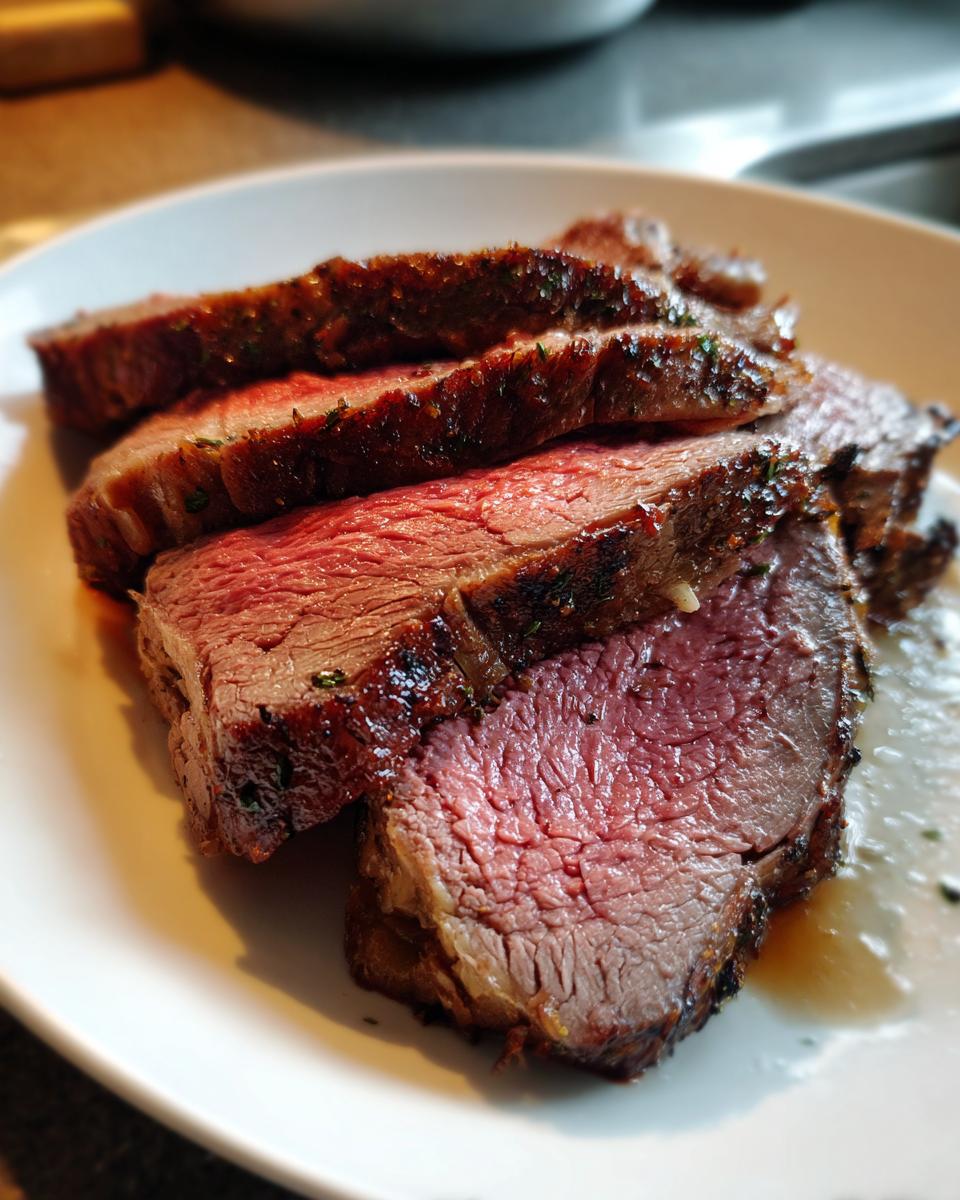
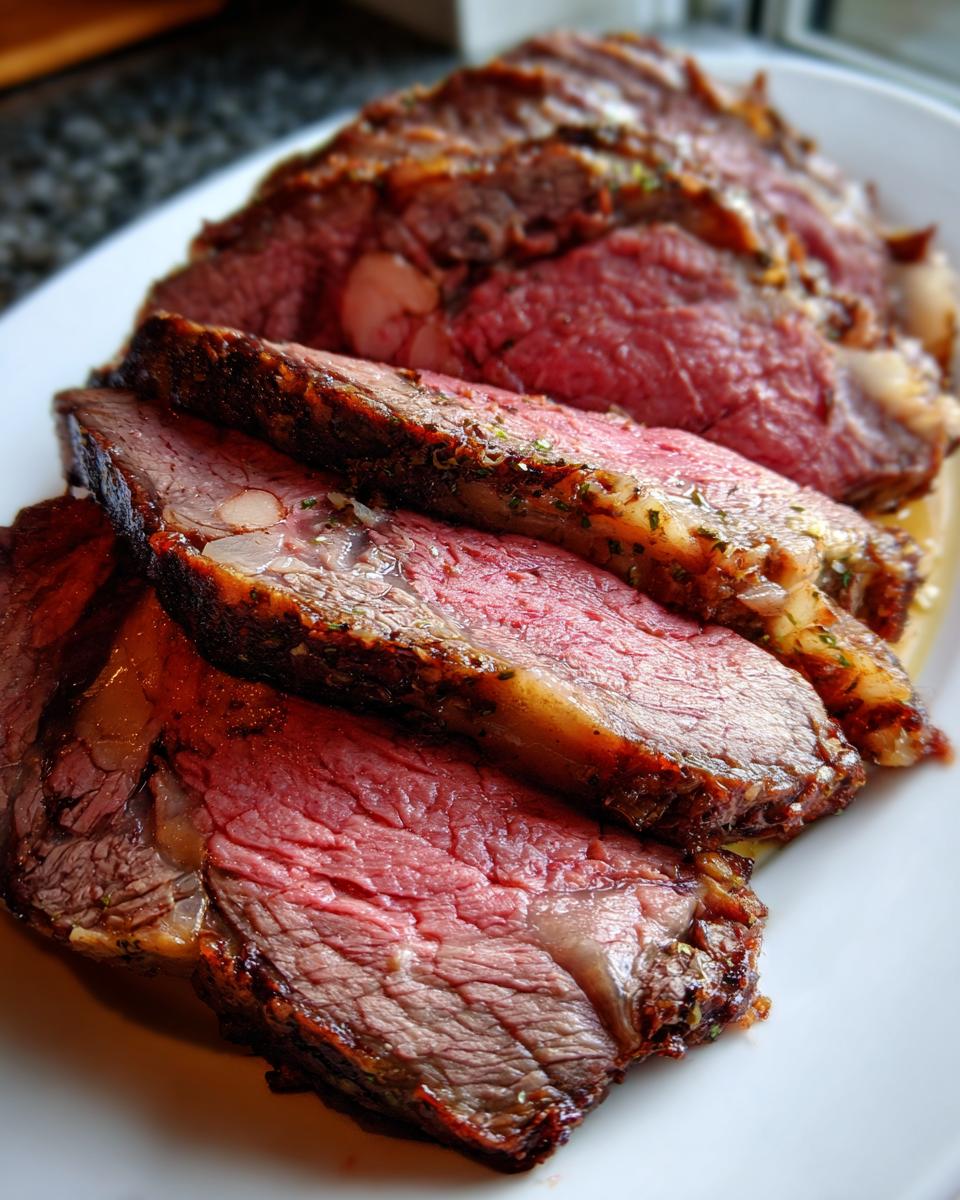
This is honestly as important as the resting period! Once your roast has rested—and you’ve let it sit for those crucial 20 minutes—it’s time to carve. I know it’s tempting to just cut thick steaks off the end, but you need to look closely at the meat. You’ll see the muscle fibers running in one direction; that’s the grain. You must slice *against* that grain. If you cut parallel to the fibers, your slices end up tough and chewy because you’re not actually cutting the muscle up. Cutting against it shortens those fibers, making every single piece unbelievably tender and melt-in-your-mouth, which is exactly what we want for this king of roasts!
Frequently Asked Questions About Cooking *Prime Rib*
When you’re cooking something this special, it’s natural to have extra questions floating around! I’ve gathered a few things readers often ask me when they are getting ready to make their big *holiday beef roast recipe*. Getting these small details right is what really elevates the dish into something truly spectacular. If you have more questions, don’t hesitate to reach out to me on my About Page!
Can I use a dry brine overnight for a better *prime rib*?
Oh gosh, yes! I absolutely encourage it if you have the time! Dry brining is just a fancy term for salting your meat well ahead of time. I usually apply extra salt—just rubbing it thickly over the surface—the night before and leave it uncovered in the fridge. This process draws out surface moisture initially, but then the salt draws the flavor deep into the meat fibers while the exterior dries out perfectly. It’s the secret weapon for the best crispy crust on your *prime rib*!
What is the best internal temperature for rare *prime rib*?
If medium-rare (130°F to 135°F final) is my personal favorite, rare is definitely for those who love a very cool, deep-red center. To achieve a true rare *prime rib*, you want to pull the roast out of the oven when your thermometer hits 120°F. Remember, it will keep climbing while it rests! If you pull it out at 120°F, after that 20-minute rest, it should settle right around 125°F. That delivers that beautiful, cool, ruby-red finish people look for in a rare preparation. It’s key for a truly *tender prime rib roast*!
Sharing Your *Holiday Beef Roast Recipe* Success
And there you have it—your very own recipe for a totally stress-free, show-stopping *prime rib*! I truly hope tackling this famous roast gives you that rush of confidence I talk about. Cooking a perfect centerpiece like this for your family is such an accomplishment, and you deserve all the compliments coming your way!
Now that you’ve conquered the two-temperature method, I want to hear all about it! Did the garlic herb rub turn out amazing? How did your family react when you carved that perfect slice of medium-rare beef? Please take a second to drop a comment below, and let me know how your *holiday beef roast recipe* turned out. Seriously, reading your success stories is honestly the best part of my day!
If you’re already dreaming up your next big meal, remember this technique works for many large roasts. Don’t let this be the last time you wow your guests! If you ever have questions while you’re cooking or just want to share a photo of your masterpiece, you can always reach out to me directly through the Contact Page. Happy cooking, my friend!
PrintPerfect Medium Rare Oven Roasted Prime Rib
Follow this simple guide to cook a juicy, tender prime rib roast to a perfect medium rare every time. This recipe is ideal for holiday feasts and special family gatherings.
- Prep Time: 20 min
- Cook Time: 150 min
- Total Time: 170 min
- Yield: 6-8 servings 1x
- Category: Holiday Roast
- Method: Oven Roasting
- Cuisine: American
- Diet: Low Fat
Ingredients
- 1 (5-7 pound) bone-in prime rib roast, well-marbled
- 3 tablespoons coarse kosher salt
- 2 tablespoons freshly ground black pepper
- 1 tablespoon dried thyme
- 1 tablespoon dried rosemary
- 6 cloves garlic, minced
- 2 tablespoons olive oil
- 1 cup beef broth (for au jus)
Instructions
- Remove the prime rib roast from the refrigerator 3 to 4 hours before cooking to allow it to come close to room temperature. This step helps the roast cook more evenly.
- Preheat your oven to 450 degrees Fahrenheit.
- In a small bowl, combine the kosher salt, black pepper, dried thyme, and dried rosemary.
- In another small bowl, mix the minced garlic and olive oil to create a paste.
- Pat the entire surface of the roast dry with paper towels.
- Rub the garlic-oil mixture all over the roast. Then, generously rub the herb and salt mixture onto all sides of the meat.
- Place the roast, fat-side up, on a rack in a sturdy roasting pan. If using a boneless roast, tie it with butcher’s twine every two inches to help it hold its shape.
- Place the roast in the preheated 450°F oven and roast for 15 minutes.
- Reduce the oven temperature to 325 degrees Fahrenheit. Continue roasting until the internal temperature reaches 125 degrees Fahrenheit for medium-rare. Use a meat thermometer inserted into the thickest part of the roast, avoiding bone contact. This usually takes about 13-15 minutes per pound at this lower temperature.
- Remove the roast from the oven when it hits 125°F.
- Tent the roast loosely with aluminum foil and let it rest for at least 20 minutes before slicing. The internal temperature will rise to about 130-135°F during resting, achieving a perfect medium-rare.
- To make the au jus, pour the beef broth into the bottom of the roasting pan, scraping up any browned bits (fond) from the bottom. Simmer this liquid on the stovetop until slightly reduced, or simply serve the pan drippings as is.
- Slice the prime rib against the grain and serve immediately with the pan drippings or au jus.
Notes
- For a crispier crust, you can sear the roast on the stovetop in a hot, oiled pan for 2-3 minutes per side before applying the rub and roasting.
- If you prefer your roast closer to medium, aim for an internal temperature of 130°F before resting.
- Always use a reliable meat thermometer; cooking time per pound is an estimate.
Nutrition
- Serving Size: 6 oz cooked
- Calories: 450
- Sugar: 0
- Sodium: 450
- Fat: 30
- Saturated Fat: 12
- Unsaturated Fat: 18
- Trans Fat: 0
- Carbohydrates: 0
- Fiber: 0
- Protein: 40
- Cholesterol: 140